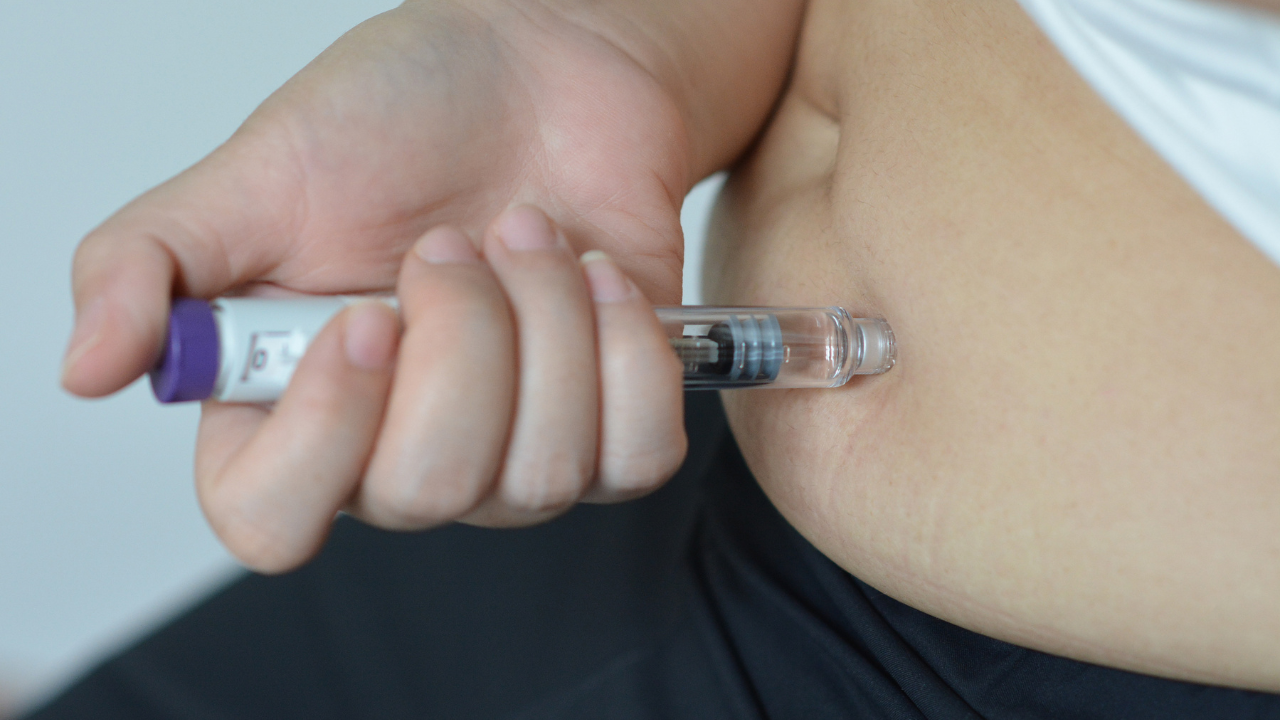
Glucagon-like peptide-1 (GLP-1) receptor agonists have become one of the most prescribed drug classes in metabolic medicine - and for good reason. Their efficacy data in weight loss and glycemic control is among the strongest we have seen. But clinical mastery requires more than knowing the dose range. It requires understanding why these agents work, which informs every decision you make as a prescriber.
WHAT IS GLP-1?
GLP-1 is an incretin hormone secreted primarily by L-cells in the distal small intestine and colon in response to nutrient ingestion. Its physiologic half-life is short - approximately 1 to 2 minutes - due to rapid degradation by dipeptidyl peptidase-4 (DPP-4).
Pharmacologic GLP-1 receptor agonists are engineered to resist DPP-4 degradation, extending their duration of action from minutes to days or weeks depending on the formulation.
MECHANISM OF ACTION: THE TWO PRIMARY SITES
- Pancreatic Effects (Peripheral)
At the level of the pancreas, GLP-1 receptor activation drives:
- Glucose-dependent insulin secretion from beta cells - critically, only when blood glucose is elevated, which limits hypoglycemia risk
- Suppression of glucagon release from alpha cells, reducing hepatic glucose output
- Beta cell proliferation and reduced apoptosis (observed in preclinical models)
This glucose-dependent mechanism is what distinguishes GLP-1 receptor agonists from older secretagogues and explains their favorable hypoglycemia profile in non-insulin-dependent patients.
2. Central Nervous System Effects
GLP-1 receptors are expressed throughout the brain, with high density in the hypothalamus and brainstem - particularly the nucleus tractus solitarius (NTS) and area postrema. Activation at these sites:
- Reduces appetite and caloric intake by modulating satiety signaling
- Slows gastric emptying, contributing to early satiety (and nausea in susceptible patients)
- Affects reward pathways, reducing food-seeking behavior
This central mechanism explains why weight loss with GLP-1 receptor agonists is substantially greater than what can be achieved through glycemic control alone.
RECEPTOR BIOLOGY: WHY IT MATTERS CLINICALLY
The GLP-1 receptor (GLP1R) is a class B G-protein-coupled receptor (GPCR). Activation triggers adenylyl cyclase, increasing intracellular cyclic AMP (cAMP) and activating downstream PKA and EPAC pathways. This cascade is responsible for insulin secretion at the cellular level.
What this means for your practice:
- Drug-drug interactions involving cAMP pathways can theoretically influence efficacy - though clinically significant interactions are uncommon
- Receptor downregulation with chronic stimulation may contribute to plateau effects seen with long-term therapy
- Individual variation in GLP1R expression (genetic polymorphisms) is an emerging area of research that may eventually guide patient selection
DUAL VS. TRIPLE AGONISM: THE EVOLVING LANDSCAPE
Semaglutide is a selective GLP-1 receptor agonist. Tirzepatide acts on both GLP-1 and GIP (glucose-dependent insulinotropic polypeptide) receptors - a dual agonist. Emerging agents target GLP-1, GIP, and glucagon receptors simultaneously (triple agonism), with early trial data showing even greater weight loss outcomes.
Understanding the receptor pharmacology allows you to anticipate:
- Why tirzepatide outperforms semaglutide in head-to-head weight loss data
- How GIP receptor co-activation appears to enhance rather than simply add to GLP-1 effects
- What the next generation of agents will likely look like
CLINICAL IMPLICATIONS FOR PRESCRIBERS
Knowing the mechanism of action should directly shape your practice in three ways:
- Patient counseling: You can explain to patients why nausea typically peaks early and improves - gastric emptying slows acutely but adapts over time. This sets realistic expectations and reduces early discontinuation.
- Side effect management: Nausea, vomiting, and gastroparesis-like symptoms are direct downstream effects of slowed gastric motility. Dose titration strategies work because they allow receptor desensitization to occur gradually.
- Prescribing decisions: Patients with pre-existing gastroparesis require careful evaluation before initiation. Patients using oral contraceptives need counseling on potential absorption changes. Understanding the mechanism gives you the foundation to make these calls confidently.
BOTTOM LINE
GLP-1 receptor agonists work through a dual mechanism - peripheral pancreatic effects that are glucose-dependent and inherently safer than older secretagogues, and central CNS effects that drive the appetite suppression and weight loss that make these agents transformative.
Providers who understand this pharmacology are better counselors, better prescribers, and better positioned to defend their clinical decisions.