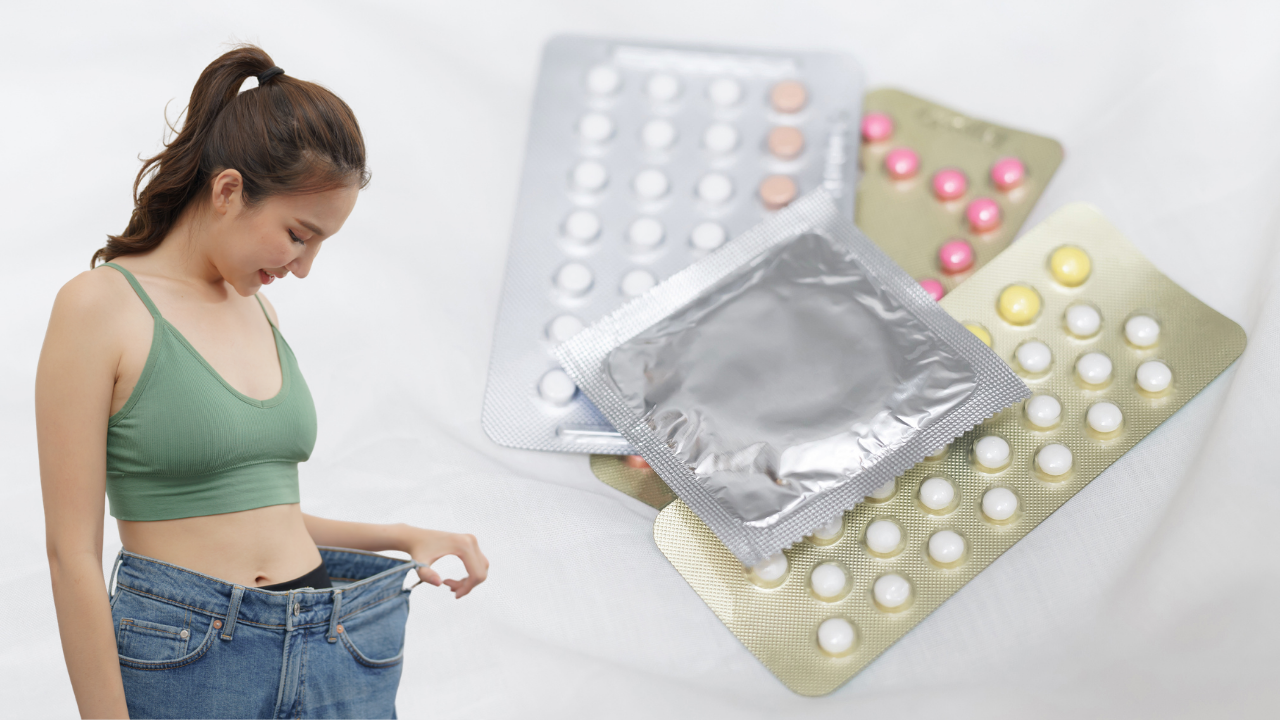
Contraception counseling is not typically the first thing that comes to mind when a provider is setting up a GLP-1 or weight loss practice. But for any practice serving reproductive-age women, it is a conversation that belongs in every initial consultation - and the clinical reasons are more significant than most providers realize.
This article covers two distinct but related issues: the effect of GLP-1 receptor agonists on oral contraceptive absorption, and the restoration of fertility that frequently accompanies significant weight loss. Understanding both - and building a brief contraception conversation into your standard workflow - protects your patients and reduces your liability exposure.
GLP-1 RECEPTOR AGONISTS AND ORAL CONTRACEPTIVE ABSORPTION
The mechanism here is straightforward once you understand GLP-1 pharmacology. GLP-1 receptor agonists slow gastric emptying as part of their mechanism of action. This is the same mechanism responsible for early satiety and, in some patients, nausea. It is also the mechanism that can interfere with the absorption of orally administered medications - including oral contraceptives.
Oral contraceptives rely on consistent gastrointestinal absorption to maintain the steady hormone levels that provide contraceptive efficacy. When gastric emptying is significantly delayed, the absorption profile of those hormones changes. Peak plasma concentrations may be lower, delayed, or less consistent than they would be in the absence of a GLP-1 agent.
The clinical significance of this interaction is an area of ongoing research, and it is important to note that the absolute risk of contraceptive failure due to this mechanism alone is not fully quantified in the current literature. However, the FDA labeling for semaglutide specifically notes that it may reduce the effectiveness of oral contraceptives and recommends that patients switch to a non-oral contraceptive method or add a barrier method for at least four weeks after each dose escalation.
For prescribers, this is a concrete, actionable piece of counseling that belongs in every GLP-1 initiation conversation with a reproductive-age female patient who uses oral contraception.
PRACTICAL GUIDANCE FOR ORAL CONTRACEPTIVE USERS ON GLP-1 THERAPY
When a patient on oral contraceptives is initiating GLP-1 therapy, the following approach is reasonable and defensible:
Counsel the patient on the potential for reduced oral contraceptive absorption during the titration phase. Recommend the addition of a barrier method - such as condoms - during each dose escalation period, consistent with FDA labeling guidance. Discuss the option of switching to a non-oral contraceptive method if consistent protection is a priority. Long-acting reversible contraceptives such as hormonal IUDs or implants are not affected by GLP-1-mediated gastric motility changes and provide highly reliable contraception regardless of what the patient is taking orally.
Document this conversation in the patient's chart. A brief note confirming that contraceptive counseling was provided, that the patient was informed of the potential interaction, and that she understands her options is straightforward to write and important to have.
WEIGHT LOSS AND FERTILITY RESTORATION
The second contraception issue in a weight loss practice is less commonly discussed but equally important. Significant weight loss - particularly in women with obesity-related hormonal disruption - can restore ovulatory function that had been absent or irregular for years.
Obesity is strongly associated with anovulation and irregular menstrual cycles. The mechanism involves excess peripheral aromatization of androgens to estrogens in adipose tissue, elevated insulin levels that drive androgen production from the ovaries, and disruption of the hypothalamic-pituitary-ovarian axis. Together, these factors can suppress ovulation in a significant proportion of higher-BMI women of reproductive age.
As body weight decreases - often relatively early in the weight loss process - hormonal balance begins to shift. Insulin levels drop. Androgen excess normalizes. The HPO axis resumes more regular function. Ovulation can return before the patient has lost a significant percentage of her total body weight, and often before she has noticed any change in her menstrual pattern.
The clinical implication is significant. A patient who has been told she is infertile due to her weight, or who has simply assumed she cannot get pregnant because her cycles have been irregular or absent for years, may find herself ovulating - and potentially pregnant - within weeks to months of starting effective weight loss treatment.
WHO IS AT RISK
The patients most likely to experience fertility restoration with weight loss include women with polycystic ovary syndrome, which is extremely common in the higher-BMI population seeking weight loss care. Women who have had irregular or absent menstrual cycles associated with obesity are also at significant risk, as are women who have previously been counseled that fertility treatment would be needed to conceive. Additionally, women who are not actively trying to avoid pregnancy and therefore have not prioritized contraception are at elevated risk.
It is worth noting that this population often does not self-identify as being at risk for unintended pregnancy. They may not have used contraception in years because they believed conception was unlikely or impossible. A direct, nonjudgmental conversation that addresses this assumption is part of comprehensive care in a weight loss practice.
BUILDING THE CONVERSATION INTO YOUR WORKFLOW
The contraception conversation does not need to be lengthy or complicated. In most cases, a brief, structured discussion at the time of GLP-1 initiation covers everything that needs to be addressed.
The key points to cover are the potential effect of GLP-1 therapy on oral contraceptive absorption and the recommended approach during dose titration. For patients with a history of irregular cycles or PCOS, address the possibility of fertility restoration with weight loss and the importance of contraception if pregnancy is not desired. Offer to discuss contraceptive options if the patient is interested in switching methods, and document the conversation.
For practices that see a high volume of reproductive-age women, having a brief contraception counseling checklist as part of the GLP-1 intake process ensures that this conversation happens consistently and is consistently documented.
BOTTOM LINE
Contraception belongs in the GLP-1 conversation for every reproductive-age female patient. The interaction between GLP-1 agents and oral contraceptive absorption is documented in FDA labeling and is a concrete counseling point that providers can act on immediately. The potential for fertility restoration with weight loss is a predictable clinical development that patients deserve to be informed about before it happens rather than after.
Both conversations are brief. Both are important. And both are part of practicing comprehensively in a weight loss and metabolic health setting.