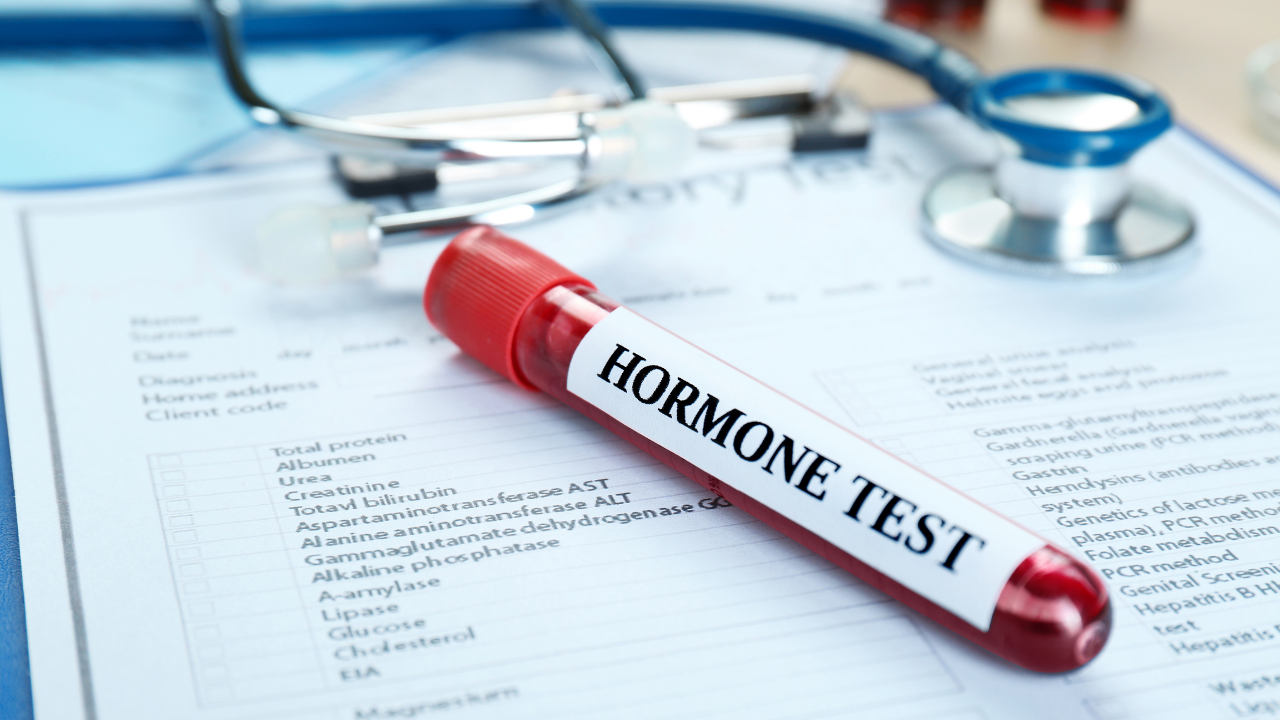
Hormone panel interpretation is one of the areas where providers new to hormone optimization most frequently struggle - and where experienced providers most frequently develop shortcuts that eventually create clinical blind spots. The goal of this article is to bring clarity to which labs to order, when to order them, how to interpret results in the context of optimal rather than merely normal ranges, and which markers are most commonly missed or misinterpreted in practice.
THE PROBLEM WITH STANDARD REFERENCE RANGES
Before diving into specific lab markers, it is worth addressing the foundational issue that underlies most hormone lab misinterpretation - the reference range problem.
Standard laboratory reference ranges are calculated from a statistical distribution of the general population. A result is flagged as abnormal only if it falls outside two standard deviations from the population mean. This means that a result can be well within the normal range and still represent a suboptimal level for an individual patient - particularly in the context of hormone optimization, where the goal is not simply to avoid pathology but to achieve functional adequacy.
The practical implication is significant. A total testosterone of 280 ng/dL in a 45-year-old man is within most labs' reference range. It is also a level at which many men will experience significant symptoms of hypogonadism - fatigue, low libido, mood changes, difficulty maintaining muscle mass. Treating to the reference range rather than the optimal range leaves symptomatic patients undertreated.
In hormone optimization practice, the relevant question is not whether the lab value is normal. It is whether the lab value is optimal for this patient's age, symptoms, and treatment goals.
THE BASELINE HORMONE PANEL: WHAT TO ORDER
A comprehensive baseline hormone panel for a patient presenting for hormone optimization should include the following core markers.
Sex hormones. Total testosterone is the starting point for both male and female patients. In women, total testosterone is often overlooked entirely - a significant clinical oversight given testosterone's role in energy, libido, mood, and cognitive function in women. Free testosterone or calculated free testosterone provides additional information about the biologically active fraction, particularly relevant in patients with potential SHBG elevation. Estradiol - specifically estradiol, not a general estrogen panel - is essential for both male and female patients. In women, estradiol is the primary estrogen relevant to symptom management and cardiovascular protection. In men on testosterone therapy, estradiol monitoring is critical for managing aromatization. Progesterone should be included for female patients, particularly those who are perimenopausal or postmenopausal and are candidates for progesterone therapy.
Binding proteins. Sex hormone-binding globulin is an important modifier of hormone bioavailability. Elevated SHBG reduces the free fraction of testosterone and estradiol, meaning a patient can have adequate total hormone levels with insufficient free hormone. SHBG is frequently elevated in patients with thyroid dysfunction, liver disease, or those on certain medications. Albumin is sometimes included in calculated free testosterone formulas and can be useful in patients with potential protein deficiency.
Adrenal hormones. DHEA-sulfate is the most clinically relevant adrenal androgen precursor. It declines with age and is frequently deficient in patients presenting with fatigue, low libido, and mood symptoms. Cortisol - ideally as a morning fasting level or as a four-point salivary cortisol if adrenal dysfunction is suspected - provides information about adrenal function that can significantly affect hormone therapy outcomes. Patients with dysregulated cortisol often do not respond well to hormone optimization until adrenal function is addressed.
Thyroid function. TSH alone is not sufficient for a hormone optimization workup. Free T3 and free T4 provide a more complete picture of thyroid function and identify patients who convert T4 to T3 poorly — a clinically relevant finding that TSH will not capture. Thyroid antibodies including TPO antibodies and thyroglobulin antibodies should be included when autoimmune thyroid disease is suspected, as Hashimoto's thyroiditis is common in the female patient population seeking hormone care and affects treatment planning.
Metabolic markers. A comprehensive metabolic panel provides baseline liver and kidney function, both of which are relevant to hormone metabolism and safety monitoring. Fasting insulin and fasting glucose - or a HOMA-IR calculation - provide information about insulin resistance that is directly relevant to hormone therapy outcomes and weight management. HbA1c should be included for patients with risk factors for diabetes or glucose dysregulation.
Additional markers. Complete blood count is relevant for patients initiating or already on testosterone therapy, as erythrocytosis is a potential adverse effect requiring monitoring. PSA should be included for male patients over 40 or any male patient initiating testosterone therapy. Vitamin D level is a standard addition to any comprehensive metabolic and hormone workup.
TIMING CONSIDERATIONS THAT AFFECT RESULT ACCURACY
The accuracy of hormone lab results is highly dependent on when the sample is drawn. Providers who do not account for timing frequently make clinical decisions based on numbers that do not accurately represent the patient's actual hormone status.
Time of day. Testosterone follows a diurnal rhythm with peak levels in the early morning hours, typically between 7 and 10 AM, and a nadir in the late afternoon and evening. Total and free testosterone should always be drawn in the morning, ideally fasting, to obtain a representative peak value. A testosterone level drawn at 3 PM may be 20 to 40 percent lower than the same patient's morning level. For female patients, the diurnal variation in testosterone is less pronounced but still present, and morning draws are still preferable.
Menstrual cycle timing. For premenopausal women, hormone levels vary dramatically across the menstrual cycle. Estradiol peaks at ovulation and is lowest in the early follicular phase. Progesterone is essentially undetectable in the follicular phase and peaks in the mid-luteal phase. Drawing hormone labs without regard to cycle timing produces results that are difficult to interpret meaningfully. As a general guideline, a baseline hormone panel in a premenopausal woman is most informative when drawn in the early follicular phase, typically days 2 through 5 of the cycle, when both estradiol and progesterone are at their lowest and most consistent baseline levels.
Fasting status. Insulin, glucose, and lipid markers should always be drawn fasting. SHBG can be affected by recent carbohydrate intake. Morning fasting draws capture the most clinically relevant snapshot for the metabolic markers included in a comprehensive hormone panel.
Monitoring timing for patients on therapy. For patients already on hormone therapy, the timing of labs relative to their last dose or insertion matters significantly. Patients on weekly testosterone injections should ideally have levels drawn at trough - the day before or the morning of their next scheduled injection - to assess the lowest point in their cycle. Pellet patients are typically monitored four to six weeks after insertion to assess peak levels and then again near the end of the insertion cycle to assess trough. Topical hormone users should be instructed not to apply their medication on the day of the draw, as transdermal absorption can artifactually elevate serum levels drawn shortly after application.
OPTIMAL RANGES VS. REFERENCE RANGES: PRACTICAL TARGETS
The following represents a general framework for functional optimal ranges in hormone optimization practice. These are not universal standards and should be individualized based on patient symptoms, age, and clinical context.
Total testosterone in men. Functional optimization typically targets 700 to 1100 ng/dL, though some patients feel best at the higher end and others at the lower end of this range. The key is symptom correlation - lab values should be interpreted alongside clinical presentation, not in isolation.
Total testosterone in women. Female testosterone optimization typically targets 50 to 100 ng/dL for total testosterone, with free testosterone used as a secondary guide. Many women are profoundly symptomatic at levels below 30 ng/dL even when those levels fall within the standard female reference range.
Estradiol in postmenopausal women on therapy. A commonly targeted range is 50 to 150 pg/mL, though individual symptom response varies considerably. Some women require higher levels for adequate symptom relief. Estradiol levels should always be interpreted alongside symptom status - a number within the target range means little if the patient remains symptomatic.
Progesterone. In postmenopausal women on oral micronized progesterone, serum progesterone levels are a poor marker of tissue effect due to first-pass metabolism. Symptom assessment - sleep quality, mood, anxiety - is more clinically useful than serum levels for monitoring progesterone adequacy in this population.
DHEA-sulfate. Optimal levels vary significantly by age and sex. A general functional target in adults is 150 to 380 mcg/dL for women and 280 to 640 mcg/dL for men, though age-adjusted reference ranges should be used as a guide.
Vitamin D. A functional target of 50 to 80 ng/mL is supported by the integrative and functional medicine literature, in contrast to the standard reference range lower threshold of 30 ng/mL.
COMMONLY MISSED AND MISINTERPRETED MARKERS
Several markers are consistently missed or misinterpreted in hormone optimization practice.
Free testosterone in women. Many providers order total testosterone only and miss the free fraction, which is the biologically active component. A woman with normal total testosterone but elevated SHBG may have very low free testosterone - explaining persistent symptoms despite seemingly adequate total levels.
Estradiol in men on testosterone therapy. Testosterone aromatizes to estradiol, and estradiol levels in men on therapy can rise significantly - causing symptoms including water retention, mood changes, gynecomastia, and sexual dysfunction. Providers who monitor testosterone without monitoring estradiol in male patients are missing a clinically important piece of the picture.
Free T3 in thyroid workup. A patient with normal TSH and normal free T4 may still have inadequate T3 if conversion from T4 to T3 is impaired. Free T3 is the metabolically active thyroid hormone, and its deficiency produces symptoms identical to hypothyroidism despite normal TSH. This is particularly relevant in patients who report persistent fatigue, weight gain, cold intolerance, and cognitive slowing despite being told their thyroid is normal.
Fasting insulin. Most routine metabolic panels include fasting glucose but not fasting insulin. A patient can have normal fasting glucose with significantly elevated fasting insulin - indicating insulin resistance before it is detectable by glucose alone. In the context of hormone optimization and weight management, fasting insulin provides critical early information about metabolic health that glucose alone does not capture.
BOTTOM LINE
A well-constructed hormone panel ordered at the right time and interpreted against functional optimal ranges rather than population-based reference ranges is one of the highest-yield clinical tools in hormone optimization practice. Providers who order the right tests, draw them at the right time, and interpret them in the context of the individual patient's symptoms and goals consistently achieve better clinical outcomes than those who rely on generic panels and standard reference ranges.