Your Chart Should Say What You Actually Did.

I've seen what happens when a chart gets pulled - for a lawsuit, a board complaint, a bad outcome nobody saw coming. The nurse remembers exactly what they did. The chart doesn't say it.
I built Chart Like You May Have to Defend It so you don't find that out the hard way. Learn how to write notes that show your assessment, your actions, and your judgment - clearly, every time.
Earn 3.0 ANCC NCPD contact hours - and the confidence that your charting has your back.
Your Chart Should Say What You Actually Did.
I've seen what happens when a chart gets pulled - for a lawsuit, a board complaint, a bad outcome nobody saw coming. The nurse remembers exactly what they did. The chart doesn't say it.
I built Chart Like You May Have to Defend It so you don't find that out the hard way. Learn how to write notes that show your assessment, your actions, and your judgment - clearly, every time.
Earn 3.0 ANCC NCPD contact hours - and the confidence that your charting has your back.
Welcome!
Most nurses were never taught how to chart for the moment their note gets read by someone who wasn't there - a risk manager, an attorney, a board investigator, the next shift trying to figure out what actually happened.
That's exactly why this course exists.

You Know That Feeling...
→ When you're signing off a note at the end of a twelve-hour shift and wondering if it actually says what happened.
→ When you read someone else's charting and can't tell what they assessed, what they did, or when.
→ When you hear about a peer's chart being pulled for a complaint and think, would mine hold up?

......
You didn't go through school, build your assessment skills, and learn to think on your feet at the bedside just to have a vague note undercut all of it. It's the feeling of knowing you did the work - but not being sure your chart proves it.
But here's what's really happening:
Most weak charting isn't dishonest.
It's rushed, vague, or copied forward without a second thought - and that's exactly what makes it easy to misread later.
"Patient tolerating well" tells a reviewer nothing.
A note that documents the actual assessment, the actual intervention, and the actual response tells the whole story instead.
Your chart is the only record of your judgment that survives the shift.
Once you clock out, the note is all that's left to show what you actually assessed and did.
"I remember what happened" isn't something you can put on the stand.
If it's not written down clearly, it's as if it didn't happen - no matter how well you remember it.

Your Clinical Skills? You've Got Those.
Your documentation? That's where most nurses are exposed.
And "I know what I did" isn't something anyone else can read off a vague note.
Welcome!
Most nurses were never taught how to chart for the moment their note gets read by someone who wasn't there - a risk manager, an attorney, a board investigator, the next shift trying to figure out what actually happened.
That's exactly why this course exists.

You Know That Feeling...
→ When you're signing off a note at the end of a twelve-hour shift and wondering if it actually says what happened.
→ When you read someone else's charting and can't tell what they assessed, what they did, or when.
→ When you hear about a peer's chart being pulled for a complaint and think, would mine hold up?
......
You didn't go through school, build your assessment skills, and learn to think on your feet at the bedside just to have a vague note undercut all of it. It's the feeling of knowing you did the work - but not being sure your chart proves it.
But here's what's really happening:
Most weak charting isn't dishonest.
It's rushed, vague, or copied forward without a second thought - and that's exactly what makes it easy to misread later.
"Patient tolerating well" tells a reviewer nothing.
A note that documents the actual assessment, the actual intervention, and the actual response tells the whole story instead.
Your chart is the only record of your judgment that survives the shift.
Once you clock out, the note is all that's left to show what you actually assessed and did.
"I remember what happened" isn't something you can put on the stand.
If it's not written down clearly, it's as if it didn't happen - no matter how well you remember it.

Your Clinical Skills? You've Got Those.
Your documentation? That's where most nurses are exposed.
And "I know what I did" isn't something anyone else can read off a vague note.
What If Your Charting Could Speak for You?
Picture this...
✓ Your assessment findings are specific enough that anyone reading them can picture your patient.
✓ Your interventions, education, and communication are all clearly documented - not implied.
✓ A change in condition is caught, escalated, and charted the way it actually happened.
✓ Your falls, refusals, and high-risk notes hold up to scrutiny instead of raising questions.
✓ You know exactly what to do with a copy-forward field, a late entry, or a correction.
✓ You finish your note - and your shift - with confidence, not a nagging feeling that you missed something.
That's not just cleaner documentation. It's what happens when you stop charting from habit and start charting like your note might one day be the only witness in the room.
START CHARTING WITH CONFIDENCEWhat If Your Charting Could Speak for You?
Picture this...
✓ Your assessment findings are specific enough that anyone reading them can picture your patient.
✓ Your interventions, education, and communication are all clearly documented — not implied.
✓ A change in condition is caught, escalated, and charted the way it actually happened.
✓ Your falls, refusals, and high-risk notes hold up to scrutiny instead of raising questions.
✓ You know exactly what to do with a copy-forward field, a late entry, or a correction.
✓ You finish your note — and your shift — with confidence, not a nagging feeling that you missed something.
That's not just cleaner documentation. It's what happens when you stop charting from habit and start charting like your note might one day be the only witness in the room.
START CHARTING WITH CONFIDENCEBuilt by a Nurse Who's Lived the Bedside
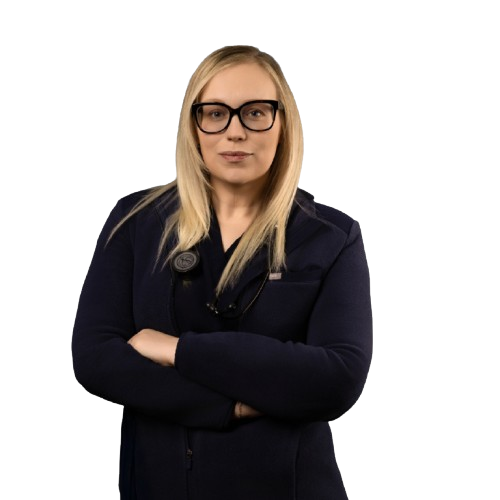
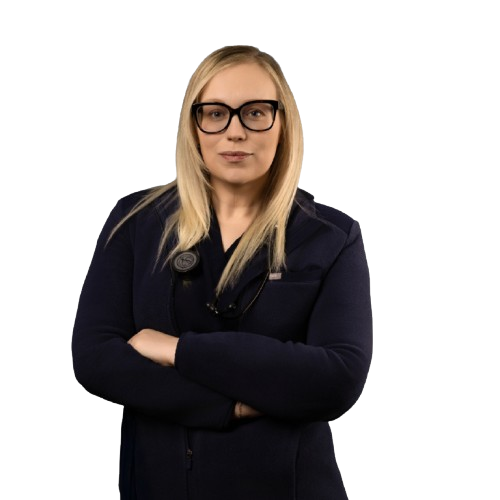
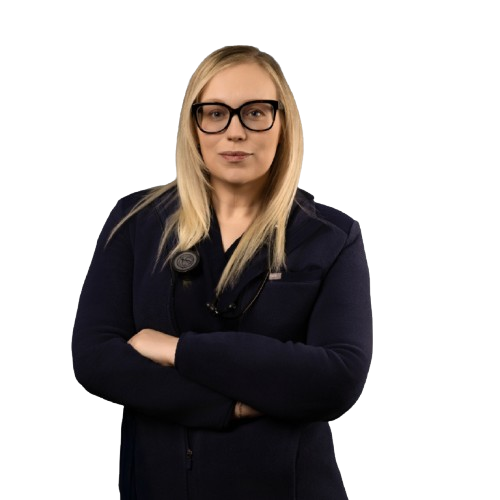
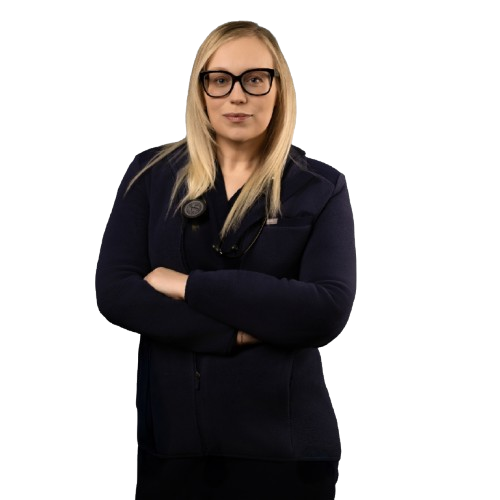
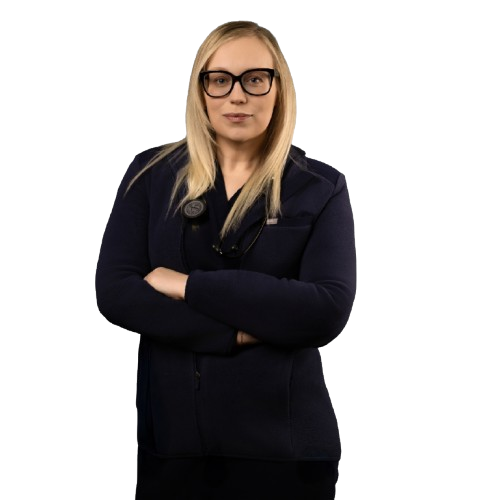
I'm Miranda Spry, BSN, RN, and I built Chart Like You May Have to Defend It because I know what it's like to write a note in the middle of a chaotic shift and wonder, hours later, if it actually captured what happened.
Documentation training often stays theoretical - general rules, generic examples, nothing that feels like your unit. This course doesn't work that way.
Every module is built around real bedside situations: a fall, a refusal, a patient trying to leave AMA, a change in condition that needs to go up the chain. You'll see weak charting side by side with strong charting, and you'll practice writing the kind of note that actually reflects your clinical judgment.
This isn't charting theory. It's charting practice, for the situations you actually work through.
Built by a Nurse Who's Lived the Bedside
I'm Miranda Spry, BSN, RN, and I built Chart Like You May Have to Defend It because I know what it's like to write a note in the middle of a chaotic shift and wonder, hours later, if it actually captured what happened.
Documentation training often stays theoretical - general rules, generic examples, nothing that feels like your unit. This course doesn't work that way.
Every module is built around real bedside situations: a fall, a refusal, a patient trying to leave AMA, a change in condition that needs to go up the chain. You'll see weak charting side by side with strong charting, and you'll practice writing the kind of note that actually reflects your clinical judgment.
This isn't charting theory. It's charting practice, for the situations you actually work through.
I started teaching what I wish someone had taught me earlier: how to write a note that actually holds up.
Not charting theory. Not a list of rules to memorize.
The real bedside situations: falls, refusals, changes in condition, and those moments that may later be closely reviewed. More importantly, how to document them clearly and appropriately.
That’s why I created Chart Like You May Have to Defend It.
This isn’t another generic documentation course. It’s built around real examples, weak-versus-strong documentation comparisons, and the process I wish I had learned from the beginning.
Because you shouldn’t have to guess whether your documentation is strong enough.
This is the habit that protects you.
START CHARTING WITH CONFIDENCEI started teaching what I wish someone had taught me earlier: how to write a note that actually holds up.
Not charting theory. Not a list of rules to memorize.
The real bedside situations: falls, refusals, changes in condition, and those moments that may later be closely reviewed. More importantly, how to document them clearly and appropriately.
That’s why I created Chart Like You May Have to Defend It.
This isn’t another generic documentation course. It’s built around real examples, weak-versus-strong documentation comparisons, and the process I wish I had learned from the beginning.
Because you shouldn’t have to guess whether your documentation is strong enough.
This is the habit that protects you.
START CHARTING WITH CONFIDENCE
This Is For You If...
✓ You're a bedside, inpatient, ED, critical-care, or rehab nurse who wants documentation that actually reflects your care.
✓ You want to know exactly how to chart a change in condition, a provider notification, and an escalation.
✓ You want real examples - weak versus strong - not abstract charting rules.
✓ You're ready to stop hoping your notes are "good enough" and start knowing they hold up.
This Is Not For You If...
✗ You think your charting habits are already airtight and there's nothing to learn.
✗ You're not willing to look closely at your own documentation patterns.
✗ You believe copy-forward and smart phrases are harmless shortcuts.
✗ You'd rather keep charting on autopilot than build a stronger habit.
This Is For You If...
✓ You're a bedside, inpatient, ED, critical-care, or rehab nurse who wants documentation that actually reflects your care.
✓ You want to know exactly how to chart a change in condition, a provider notification, and an escalation.
✓ You want real examples - weak versus strong - not abstract charting rules.
✓ You're ready to stop hoping your notes are "good enough" and start knowing they hold up.
This Is Not For You If...
✗ You think your charting habits are already airtight and there's nothing to learn.
✗ You're not willing to look closely at your own documentation patterns.
✗ You believe copy-forward and smart phrases are harmless shortcuts.
✗ You'd rather keep charting on autopilot than build a stronger habit.
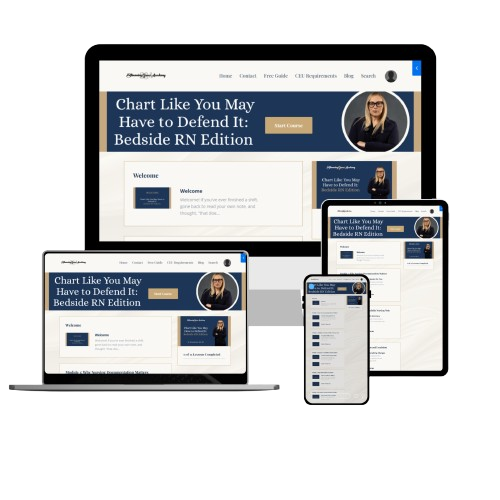
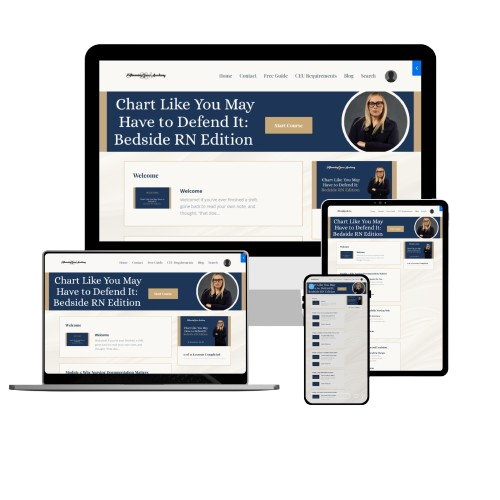
When you enroll in Chart Like You May Have to Defend It, you get instant access to everything you need:

Chart Like You May Have to Defend It Course System
The full self-paced course - six modules covering why documentation matters, how to build a strong bedside note, changes in condition and escalation, high-risk scenarios, and electronic documentation mistakes. Earn 3.0 ANCC NCPD contact hours.
Downloadable Bedside Resource Library
Including your Bedside Nursing Documentation Checklist, Change-of-Condition and Provider-Notification Guide, Weak Charting Versus Strong Charting Examples, and the High-Risk Documentation Case Workbook.
Lifetime Access
Access to all current course materials plus ongoing updates and new content, ensuring you always have the latest resources at your fingertips.
Chart Like You May Have to Defend It Course System
The full self-paced course - six modules covering why documentation matters, how to build a strong bedside note, changes in condition and escalation, high-risk scenarios, and electronic documentation mistakes. Earn 3.0 ANCC NCPD contact hours.
Downloadable Bedside Resource Library
Including your Bedside Nursing Documentation Checklist, Change-of-Condition and Provider-Notification Guide, Weak Charting Versus Strong Charting Examples, and the High-Risk Documentation Case Workbook.
Lifetime Access
Access to all current course materials plus ongoing updates and new content, ensuring you always have the latest resources at your fingertips.
What's Inside Chart Like You May Have to Defend It
Module 1
Why Nursing Documentation Matters
The medical record as a patient-care and communication tool, your responsibility as the nurse, and the difference between objective charting and defensive storytelling.
Module 2
Building a Strong Bedside Nursing Note
Assessment findings, interventions, education, communication, and reassessment - plus how to use direct patient quotations appropriately. Weak examples compared side by side with strong ones.
Module 3
Changes in Condition and Escalation
What must be documented, vital-sign trends, provider notification, SBAR communication, orders and read-back, no response from the provider, and chain-of-command escalation.
Module 4
High-Risk Bedside Scenarios
Realistic, fictional cases covering falls, medication events, refusals, a patient trying to leave before treatment is complete, restraints, concerning behavior, skin and wound changes, and transfers and handoffs.
Module 5
Electronic Documentation MistakesMistakes
Copy-forward risks, autofill and conflicting entries, smart phrases that don't match your patient, late entries and corrections, and your organization's downtime procedure.
Module 6
Final Cases, Post-Test and Evaluation
A case-based final assessment, a personal reflection on one documentation change you'll make, and the required course evaluation.
....
PLUS: 3.0 ANCC NCPD Contact Hours Included
Complete the course, score 80% or higher on the post-test, and submit the course evaluation to earn your certificate - accredited through Slimming Grace Academy.
Slimming Grace Academy is accredited as a provider of nursing continuing professional development by the American Nurses Credentialing Center's Commission on Accreditation.
What's Inside Chart Like You May Have to Defend It
Module 1
Why Nursing Documentation Matters
The medical record as a patient-care and communication tool, your responsibility as the nurse, and the difference between objective charting and defensive storytelling.
Module 2
Building a Strong Bedside Nursing Note
Assessment findings, interventions, education, communication, and reassessment - plus how to use direct patient quotations appropriately. Weak examples compared side by side with strong ones.
Module 3
Changes in Condition and Escalation
What must be documented, vital-sign trends, provider notification, SBAR communication, orders and read-back, no response from the provider, and chain-of-command escalation.
Module 4
High-Risk Bedside Scenarios
Realistic, fictional cases covering falls, medication events, refusals, a patient trying to leave before treatment is complete, restraints, concerning behavior, skin and wound changes, and transfers and handoffs.
Module 5
Electronic Documentation Mistakes
Copy-forward risks, autofill and conflicting entries, smart phrases that don't match your patient, late entries and corrections, and your organization's downtime procedure.
Module 6
Final Cases, Post-Test and Evaluation
A case-based final assessment, a personal reflection on one documentation change you'll make, and the required course evaluation.
....
PLUS: 3.0 ANCC NCPD Contact Hours Included
Complete the course, score 80% or higher on the post-test, and submit the course evaluation to earn your certificate - accredited through Slimming Grace Academy.
Slimming Grace Academy is accredited as a provider of nursing continuing professional development by the American Nurses Credentialing Center's Commission on Accreditation.
When you add it all up:
→ "Chart Like You May Have to Defend It" Course System: ($___ Value)
→ Bedside Documentation Resource Library: ($___ Value)
→ 3.0 ANCC NCPD Contact Hours: ($___ Value)
Total Value: $___
Your Investment Today: Just $___
ENROLL NOW
When you add it all up:
→ "Chart Like You May Have to Defend It" Course System: ($___ Value)
→ Bedside Documentation Resource Library: ($___ Value)
→ 3.0 ANCC NCPD Contact Hours: ($___ Value)
Total Value: $___
Your Investment Today:
Just $____
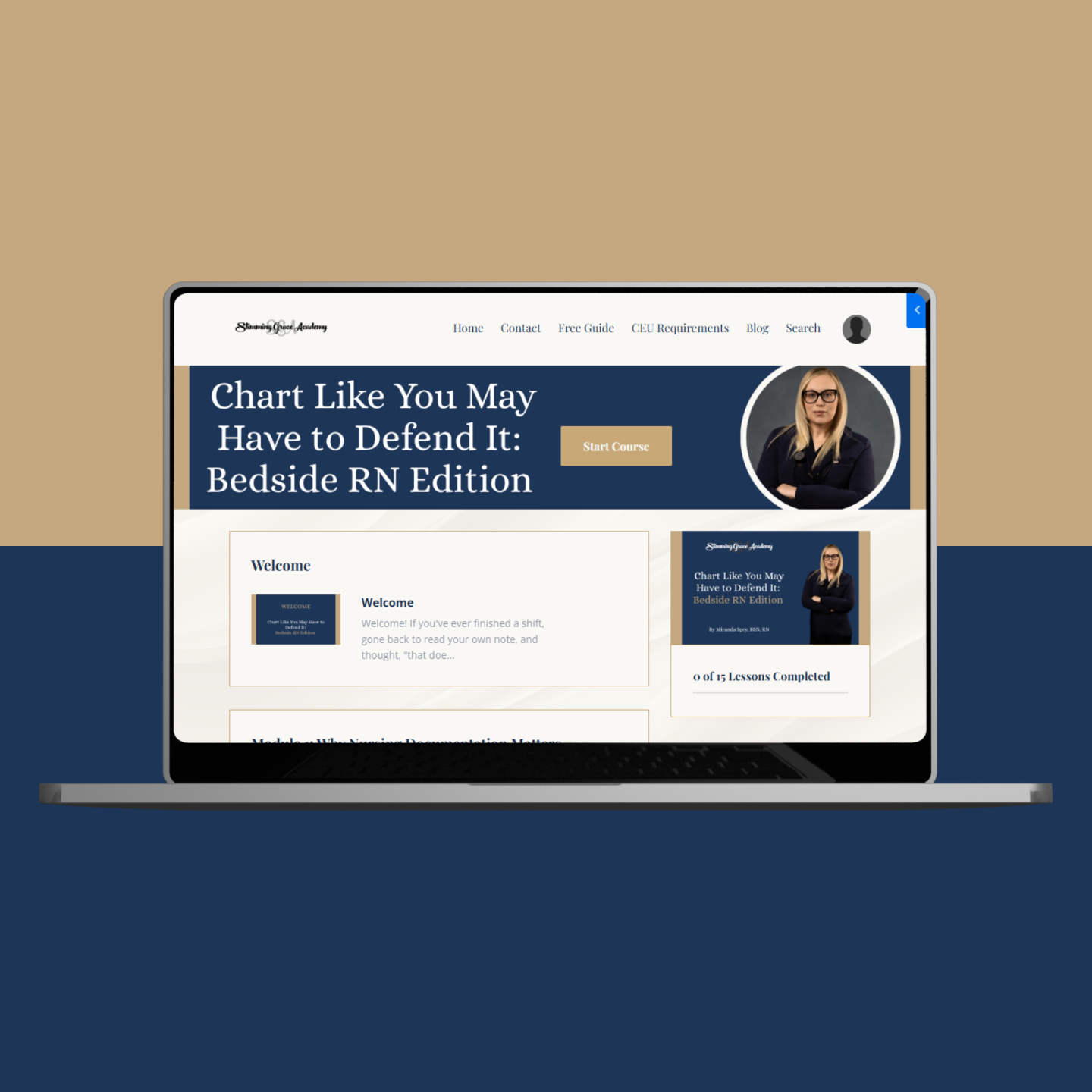
By the end of this course, you will:
➤ Chart like your license depends on it (because it does)
➤ Tell the difference between objective charting and vague, defensive storytelling
➤ Document a change in condition, provider notification, and escalation clearly
➤ Handle falls, refusals, and other high-risk situations with confidence
➤ Avoid common EHR pitfalls like copy-forward, late entries, and improper corrections
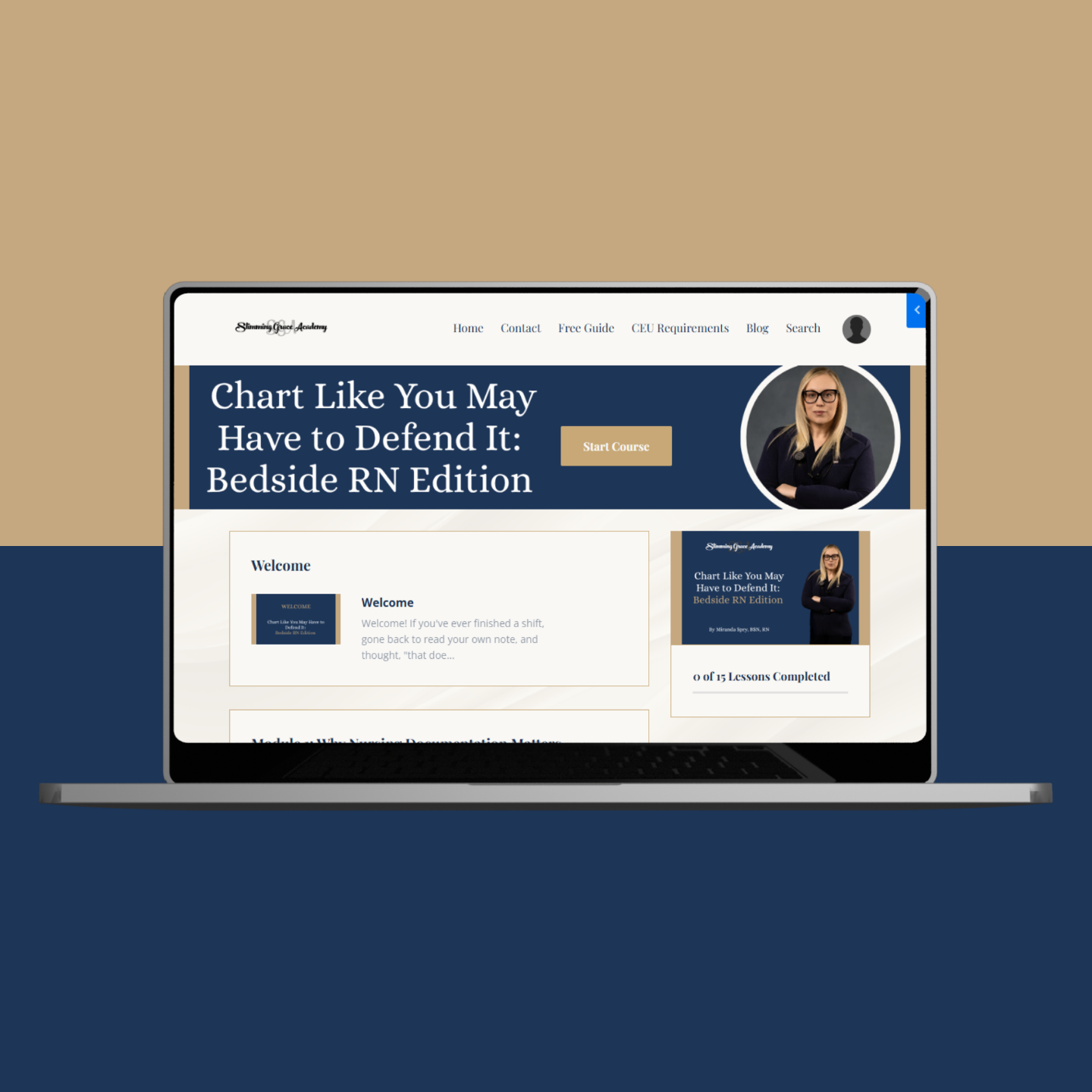
By the end of this course, you will:
➤ Chart like your license depends on it (because it does)
➤ Tell the difference between objective charting and vague, defensive storytelling
➤ Document a change in condition, provider notification, and escalation clearly
➤ Handle falls, refusals, and other high-risk situations with confidence
➤ Avoid common EHR pitfalls like copy-forward, late entries, and improper corrections

Our "Practice with Confidence" Guarantee
I stand behind this course completely and want you to feel 100% secure in your investment.
Enroll today and put the strategies to the test. If you don't feel more prepared and confident in your ability to protect your license, I haven't done my job.
Just reach out within 30 days for a refund as per our policy terms. You can start building a safer practice today, completely risk-free.
Our "Practice with Confidence" Guarantee
I stand behind this course completely and want you to feel 100% secure in your investment.
Enroll today and put the strategies to the test. If you don't feel more prepared and confident in your ability to protect your license, I haven't done my job.
Just reach out within 30 days for a refund as per our policy terms. You can start building a safer practice today, completely risk-free.
Is this course CE eligible?
Yes. This course is designed to award 3.0 ANCC NCPD contact hours upon completion of all required lessons, an 80% or higher post-test score, and the course evaluation.
How do I access the course after enrolling?
You'll receive access to your course materials through our secure online learning portal, so you can complete it at your own pace.
Do I need to finish by a certain date?
You'll get lifetime access, so you can complete it at your own pace. There's no expiration or pressure.
Is this only for nurses who've had a documentation problem flagged?
Not at all. This course is for any bedside nurse who wants documentation that clearly reflects the care they're already providing.
What if I have questions during the course?
Please email us at danni@slimminggrace.com if you have any questions!
Every Shift Ends With a Note. Make It One That Holds Up.
Every vague note is a chart that can't speak for you later. Every skipped escalation detail is a gap someone else has to fill in with guesswork. Every rushed shift is still worth a note that reflects the care you gave.
The time to build stronger charting habits is now - before a chart ever gets pulled.
START CHARTING WITH CONFIDENCE
Every Shift Ends With a Note. Make It One That Holds Up.
Every vague note is a chart that can't speak for you later. Every skipped escalation detail is a gap someone else has to fill in with guesswork. Every rushed shift is still worth a note that reflects the care you gave.
The time to build stronger charting habits is now - before a chart ever gets pulled.
Start Charting with Confidence